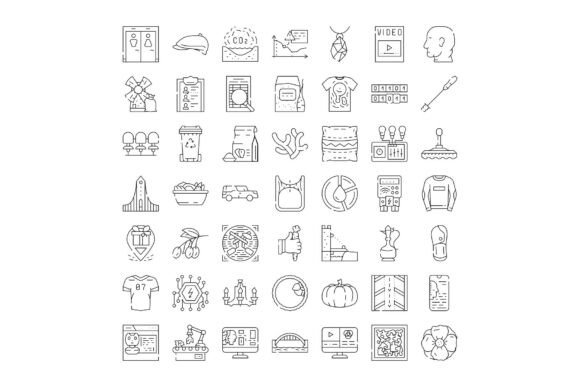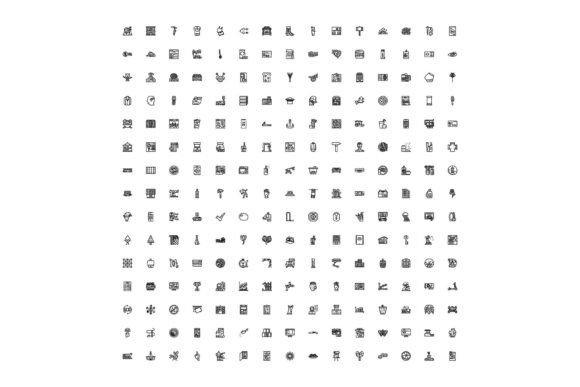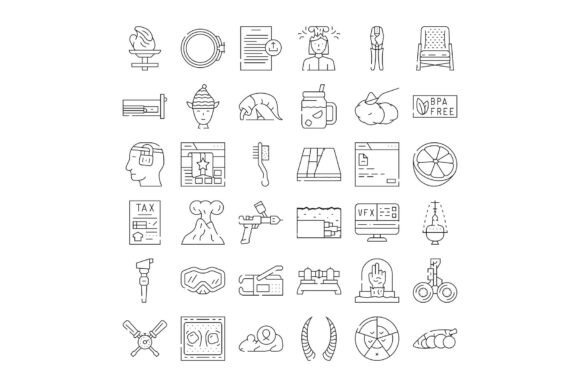
Diverse Outline Icons Collection for Web: A Modern Design Essential
In today’s fast-paced digital landscape, visual clarity and consistency are more important than ever. Designers, developers, and content creators are constantly seeking tools that streamline their workflow while maintaining a high standard of aesthetics. One such tool gaining traction across industries is the Diverse Outline Icons Collection for Web — a versatile set of minimal outline icons covering a wide range of subjects and concepts.
These icons are not just visual embellishments; they serve as intuitive navigational aids, enhance user experience, and contribute to a clean, professional design language. Whether you're building a mobile app, designing a website, or crafting marketing visuals, having access to a well-rounded icon set can make a significant difference in how users interact with your content.
Why Minimal Outline Icons Are Gaining Popularity
The rise of minimalism in digital design has shifted the focus toward simplicity, clarity, and adaptability. Outline icons, with their clean lines and lack of fill, align perfectly with this trend. They are lightweight, scalable, and easy to integrate across different platforms and screen sizes.
More importantly, outline icons offer flexibility. Designers can easily recolor them to match brand palettes, resize them without losing quality, and layer them with other design elements without overwhelming the interface. This adaptability makes the Diverse Outline Icons Collection for Web a go-to resource for professionals working on a variety of digital projects.
Meeting the Needs of Modern Workflows
As digital tools become more sophisticated, the demand for reusable, modular assets has grown. Designers and developers often work across multiple platforms and devices, requiring assets that can be easily edited and reused. The Diverse Outline Icons Collection for Web fits seamlessly into modern design workflows, especially when used with tools like Figma, Sketch, Adobe XD, or Illustrator.
- Responsive design: Icons scale beautifully across devices, maintaining clarity on both desktop and mobile screens.
- Time-saving: Ready-made icons reduce the need for custom illustration, allowing teams to focus on core functionality and user experience.
- Consistency: A unified visual style ensures that icons work cohesively across websites, apps, and branding materials.
From User Interfaces to Marketing Assets: Practical Applications
One of the most compelling aspects of the Diverse Outline Icons Collection for Web is its broad applicability. These icons are not limited to a single niche or function. Instead, they offer a comprehensive library that spans various industries and use cases. Let’s explore a few key applications:
- Web and Mobile UI: Icons help users quickly understand navigation, actions, and features. A well-designed icon can replace a paragraph of text, making interfaces more intuitive and visually appealing.
- Marketing and Presentations: Whether you're creating a landing page or a slide deck, icons help break up text and highlight key points in a visually engaging way.
- Educational and Informational Content: Icons are excellent for illustrating processes, timelines, or complex ideas in a simplified format.
- Branding and Identity: Many brands incorporate icons into their visual identity systems, using them across social media, print materials, and packaging.
Because the collection includes icons for business, technology, health, education, and lifestyle topics, it supports a wide range of creative and professional needs — making it a valuable asset for freelancers, agencies, and in-house teams alike.
Supporting Accessibility and Inclusivity
Modern design isn’t just about aesthetics — it’s also about accessibility and inclusivity. The Diverse Outline Icons Collection for Web includes icons that represent a broad spectrum of identities, abilities, and cultural contexts. This thoughtful approach ensures that digital products feel more inclusive and representative of real-world audiences.
For example, icons depicting people now often include variations in gender, age, and physical ability. These small but meaningful choices contribute to a more inclusive web and align with growing user expectations around representation and diversity in digital content.
How the Icon Landscape Has Evolved
Icons have come a long way from their early days as simple, pixel-based graphics. Today’s digital environment demands icons that are not only visually appealing but also functional, adaptable, and meaningful. The evolution from skeuomorphic to flat and then to outline styles reflects a broader shift in design priorities — toward minimalism, performance, and cross-platform consistency.
With the rise of dark mode interfaces, responsive design, and dynamic theming, outline icons have proven to be more versatile than ever. Their neutral appearance allows them to fit into both light and dark interfaces, and their simplicity ensures they remain legible at small sizes.
Moreover, as design systems become more prevalent, the need for standardized, reusable components has increased. The Diverse Outline Icons Collection for Web supports this need by offering a cohesive, well-documented set that integrates smoothly into design systems and style guides.
Choosing the Right Icon Set for Your Project
Not all icon sets are created equal. When selecting icons for your next project, consider the following factors:
- Comprehensiveness: Does the collection include icons relevant to your industry or content type?
- Consistency: Are the icons visually aligned in terms of stroke weight, corner radius, and spacing?
- Scalability: Do they maintain clarity at different sizes and resolutions?
- Licensing: Are they available under a license that suits your intended use — commercial, personal, or open source?
The Diverse Outline Icons Collection for Web checks all these boxes. It offers a broad range of icons that are consistently styled, easily customizable, and suitable for both personal and commercial use, depending on the license.
Integrating Icons into Your Workflow
Successfully incorporating icons into your design workflow involves more than just selecting them — it requires thoughtful implementation. Here are a few best practices to consider:
- Use icons to enhance, not replace, text: Icons should support understanding, not create ambiguity. Pair them with labels when clarity is critical.
- Optimize for performance: Use SVGs for scalability and performance, especially on responsive websites and apps.
- Test for accessibility: Ensure that icons are understandable to users with visual impairments by using appropriate alt text or ARIA labels.
- Maintain visual hierarchy: Use size, color, and spacing to differentiate between primary and secondary icons within your interface.
By following these principles, you can ensure that the icons you select from the Diverse Outline Icons Collection for Web contribute positively to both the aesthetics and usability of your digital products.
Looking Ahead: The Future of Web Icons
As design tools evolve and user expectations continue to rise, the role of icons in digital experiences will only become more significant. We’re already seeing a shift toward dynamic icons — those that change color, shape, or animation based on context or user interaction. This trend opens up new possibilities for personalization and engagement.
Additionally, as AI-assisted design becomes more common, we may see smarter icon libraries that suggest or generate icons based on context or content. The Diverse Outline Icons Collection for Web is well-positioned to adapt to these changes, offering a solid foundation that can be extended and enhanced as new technologies emerge.
In the meantime, the current collection remains a reliable, flexible, and visually cohesive resource for anyone looking to elevate their digital design work — from startups and educators to enterprise teams and independent creators.