Enhancing Modern Design with Hand Drawn Business Web Icons Collection
In the evolving landscape of digital design, visual elements play a pivotal role in shaping user experience and engagement. Among the most versatile and expressive tools available to designers today are the Hand Drawn Business Web Icons Collection. These icons, characterized by their organic, hand-crafted appearance, offer a unique blend of professionalism and personality, making them ideal for a wide range of applications.
The Rise of Hand-Drawn Aesthetics in Professional Design
As digital interfaces become more sophisticated, designers are increasingly turning to humanized visuals to counterbalance the sterile perfection of digital graphics. Hand-drawn icons, with their subtle imperfections and expressive lines, introduce warmth and authenticity into design. This trend is particularly evident in branding, web development, and educational platforms where relatability and approachability are key.
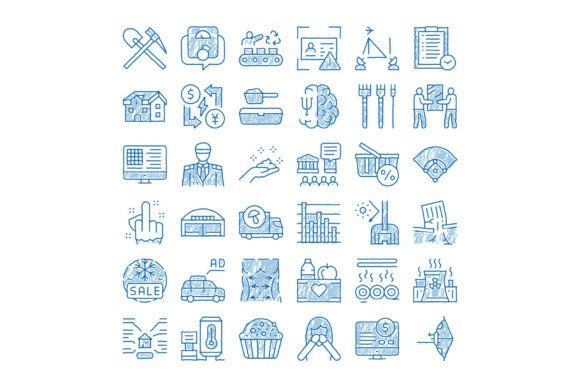
The Collection of conceptual hand drawn doodle sketch icons representing various business, web, and abstract professional themes caters to this growing demand by offering a broad spectrum of imagery that resonates with modern audiences. From finance and communication to innovation and analytics, these icons encapsulate complex ideas in a visually digestible format.
Key Characteristics of Hand Drawn Icons
- Organic Lines: Unlike vector-based icons, hand-drawn versions feature irregular strokes that mimic real-life sketching.
- Versatile Styles: These icons can be rendered in varying levels of detail, from minimalist outlines to intricate doodles.
- Emotional Resonance: The human touch in these designs evokes familiarity and trust, making them ideal for user-centric platforms.
- Scalability: Despite their artistic nature, these icons maintain clarity across devices and resolutions.
Why Choose Hand Drawn Icons for Business and Web Applications?
While traditional icon sets offer uniformity and precision, hand-drawn alternatives provide a distinct advantage in environments that prioritize creativity and emotional connection. Here are several compelling reasons to incorporate these icons into your design strategy:
1. Human-Centered Design
In sectors such as education, customer service, and wellness, establishing a human connection is crucial. Hand-drawn icons help bridge the gap between digital interfaces and real-world interactions by offering a sense of warmth and approachability.
2. Visual Differentiation
With so many platforms adopting similar design patterns, standing out visually is more challenging than ever. Hand-drawn icons offer a unique aesthetic that helps brands differentiate themselves without compromising professionalism.
3. Conceptual Clarity
Abstract ideas such as innovation, collaboration, and transformation can be difficult to convey through standard iconography. The Hand Drawn Business Web Icons Collection excels in this area by using expressive visuals that communicate nuanced concepts effectively.
4. Adaptability Across Industries
Whether you're designing for a startup pitch deck, a corporate dashboard, or an e-learning module, these icons can be tailored to suit diverse contexts. Their conceptual flexibility allows them to blend seamlessly into both formal and informal settings.
Practical Use Cases and Implementation Strategies
To fully leverage the potential of hand-drawn icons, it's essential to understand how they can be integrated into different design workflows. Below are some of the most impactful use cases:
Web and Mobile Interfaces
Icons are fundamental to intuitive navigation. In web and mobile design, hand-drawn elements can be used to highlight features, guide user actions, or create a thematic tone. For instance, a project management app might use doodle-style icons to represent tasks, calendars, and collaboration tools, enhancing usability without overwhelming the interface.
Presentations and Infographics
Visual storytelling is a powerful tool in business communication. When creating slides or data visualizations, incorporating hand-drawn icons can make complex information more digestible and engaging. A financial report, for example, could use stylized icons to represent revenue, growth, and market trends.
Educational and Training Materials
Learning platforms benefit greatly from visuals that simplify abstract ideas. Hand-drawn icons can be used to illustrate processes, categorize content, or break down complex theories into digestible visuals. This is particularly effective in e-learning modules, where maintaining learner engagement is critical.
Marketing and Branding
Branding is not just about logos and color schemes—it's about creating a cohesive visual language. Hand-drawn icons can become part of a brand’s identity, especially for companies that emphasize creativity, innovation, or community. These icons can be featured on websites, social media, packaging, and promotional materials to reinforce brand personality.
Design Considerations and Best Practices
While hand-drawn icons offer numerous benefits, their effectiveness depends on how they're implemented. Here are some best practices to ensure optimal results:
1. Consistency in Style
Even though these icons are meant to look organic, consistency is key to maintaining a cohesive design. Ensure that all icons follow a similar line weight, color palette, and level of detail to avoid visual clutter.
2. Accessibility and Readability
Despite their artistic nature, icons must remain easily recognizable. Avoid over-decorating or stylizing icons to the point where their meaning becomes ambiguous. Always test icons across different sizes and backgrounds to ensure readability.
3. Contextual Relevance
Icons should align with the content they represent. When selecting from the Collection of conceptual hand drawn doodle sketch icons representing various business, web, and abstract professional themes, choose those that accurately reflect the intended message or function.
4. Integration with UI/UX Principles
Hand-drawn icons should enhance, not disrupt, the user experience. Consider factors like placement, hierarchy, and interaction design when incorporating these elements into digital interfaces. They should guide users intuitively rather than distract them.
Future Trends and Design Evolution
As design continues to evolve, so too will the role of hand-drawn icons. Emerging trends suggest a growing preference for mixed media and layered visuals that combine hand-drawn elements with digital effects. Additionally, the rise of AI-assisted design tools may lead to more dynamic, customizable icon sets that retain the charm of hand-crafted visuals while offering greater flexibility.
Designers are also exploring the use of animated hand-drawn icons to create more engaging and interactive experiences. These animations can be used to illustrate processes, provide feedback, or simply add a playful touch to interfaces.
Conclusion
The Hand Drawn Business Web Icons Collection represents more than just a design trend—it reflects a broader shift toward human-centered, emotionally resonant digital experiences. By combining professionalism with creativity, these icons offer a powerful tool for designers across industries. Whether used in web interfaces, educational materials, or branding efforts, they bring a unique voice to visual communication that is both expressive and effective.