Unlocking the Power of Web Development and Business: The Role of Comprehensive Flat Icon Sets
Understanding the Intersection of Web Development and Business
Web development has become a cornerstone of modern business operations. From startups to multinational corporations, companies rely on well-designed, functional websites and applications to connect with customers, streamline processes, and drive growth. But behind every successful digital platform lies a combination of technical expertise, strategic thinking, and visual communication. One often overlooked, yet essential element in this equation, is the use of flat icon sets that visually represent complex ideas like web development, business strategies, and data analytics.
What Are Flat Icon Sets and Why Do They Matter?
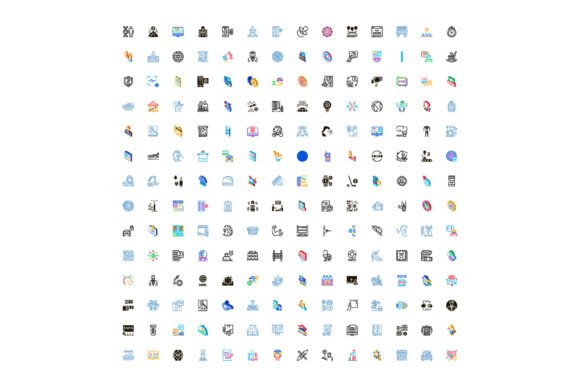
Flat icons are minimalist, two-dimensional illustrations that convey ideas through simple shapes and colors. Unlike skeuomorphic designs that mimic real-world textures, flat icons focus on clarity and usability. In the context of web development and business, these icons serve as visual shorthand for concepts such as cloud computing, user experience (UX), data analysis, and digital marketing.
Key Features of a Comprehensive Flat Icon Set
- Scalability: Icons maintain clarity at any size, making them ideal for responsive web design.
- Consistency: Uniform style across all icons ensures a cohesive visual language.
- Versatility: Suitable for websites, mobile apps, presentations, and print materials.
- Customizability: Easy to recolor or adapt to different brand guidelines.
The Significance of Visual Communication in Business and Technology
In today’s fast-paced digital world, users expect information to be delivered quickly and intuitively. This is where flat icon sets shine. They help users process information faster by replacing lengthy text with recognizable symbols. For instance, a lock icon instantly communicates security, while a pie chart conveys data analysis without the need for explanation.
Businesses leverage these visual tools in various ways:
- Website Navigation: Icons guide users through menus and actions with minimal cognitive load.
- Mobile App Design: Limited screen space makes icons essential for intuitive user interfaces.
- Marketing Materials: Infographics, reports, and slides benefit from visual storytelling using icons.
- User Onboarding: Tutorials and walkthroughs become more engaging with visual cues.
Exploring the Core Categories in a Modern Flat Icon Set
A comprehensive flat icon set typically includes a wide range of categories tailored to the needs of modern web development and business environments. Let’s break down some of the most important ones:
1. Web & App Development Icons
Icons in this category represent the tools and technologies used to build websites and mobile applications. Common examples include code brackets, servers, databases, and APIs. These visuals help developers and non-developers alike understand the structure and functionality of digital products.
2. Business & Marketing Icons
From charts and dashboards to shopping carts and customer service avatars, these icons reflect the tools and strategies used in digital marketing, sales, and business operations. They are especially useful in dashboards, pitch decks, and reports.
3. Data Analysis & Finance Icons
Icons such as bar graphs, pie charts, currency symbols, and calculators help visualize complex financial and analytical data. These are vital for presenting insights in a clear, digestible format.
4. Communication & Collaboration Icons
Emails, chat bubbles, video calls, and team avatars fall into this category. They are essential for platforms that facilitate remote work, customer support, and internal communication.
5. Cloud & Security Icons
As businesses move to the cloud and prioritize cybersecurity, icons representing cloud storage, encryption, firewalls, and user authentication become increasingly important.
6. UX/UI Design Icons
Icons like cursors, buttons, sliders, and device frames help designers and developers communicate user interface elements and interactions clearly.
How Flat Icons Enhance User Experience (UX)
User experience is at the heart of successful web and app design. Flat icons contribute to a positive UX by:
- Reducing cognitive load through intuitive visuals.
- Improving accessibility for users with reading or language barriers.
- Enhancing the aesthetic appeal of interfaces without overwhelming users.
- Supporting responsive design across different devices and screen sizes.
For example, an e-commerce site might use a shopping cart icon to indicate where users can view their purchases. This eliminates the need for text and makes the interface cleaner and more efficient.
Practical Applications Across Industries
Flat icon sets are not limited to tech companies or web developers. They are widely used across various industries to improve communication and engagement:
Education
Learning platforms use icons to categorize courses, track progress, and guide students through lessons. A book icon might represent reading materials, while a graduation cap could indicate completed modules.
Healthcare
Hospitals and health apps use icons to convey medical information quickly. For example, a heart icon may represent heart rate monitoring, while a pill bottle can indicate medication tracking.
Finance
Banking apps and financial dashboards use icons to represent transactions, savings goals, and investment options. A rising arrow might symbolize stock growth, while a wallet icon can indicate available funds.
Real Estate
Websites and apps in the real estate industry use icons to highlight property features such as bedrooms, bathrooms, and parking spaces, making it easier for buyers to compare listings.
Choosing the Right Icon Set for Your Project
When selecting a flat icon set for your business or development project, consider the following factors:
- Licensing: Ensure the icons are available under a license that suits your usage, whether personal, commercial, or open source.
- Consistency: All icons should follow the same design style, stroke weight, and color palette.
- Relevance: Choose a set that includes icons relevant to your industry or application.
- File Format: SVG is ideal for scalability, while PNG is useful for quick implementation in most platforms.
Many platforms offer premium and free flat icon sets, including Flaticon, Icons8, and Font Awesome. Always preview icons in your actual design to ensure they align with your brand and functionality needs.
Common Misconceptions About Flat Icons
While flat icons are widely used, there are a few misconceptions that can lead to poor design choices:
- Misconception 1: “Flat icons are always better than 3D icons.”
Reality: The choice depends on the context, brand identity, and audience preferences. - Misconception 2: “All flat icons are the same.”
Reality: Styles can vary significantly in line thickness, color, and detail. - Misconception 3: “Flat icons don’t need labels.”
Reality: While icons improve recognition, pairing them with text ensures clarity, especially for less common symbols.
Conclusion: The Visual Language of Modern Business and Technology
Flat icon sets are more than just decorative elements—they are essential tools for visual communication in web development and business. By simplifying complex ideas, improving user navigation, and enhancing overall design aesthetics, these icons play a crucial role in how we interact with technology today.
Whether you're designing a mobile app, building a website, or creating a business presentation, investing in a high-quality, comprehensive flat icon set can make a significant difference in how your audience understands and engages with your content. As digital experiences continue to evolve, the importance of clear, intuitive visual language will only grow.
So the next time you're working on a project that involves web development or business strategy, take a moment to consider the icons you're using—they might just be the key to unlocking a more effective and engaging experience for your users.